15 Hiking Outfits for Women That Are Functional and Flattering

A good hike asks your clothes to do two jobs at once. They need to move with you, handle sweat and weather, and keep you comfortable for hours. They also need to make you feel like yourself when you catch your reflection in a trailhead window or hand your phone to a friend for a photo.
The good news is that functional and flattering are no longer a compromise. Outdoor brands have widened their size runs, softened their silhouettes, and borrowed ideas from everyday style. The result is a trail wardrobe that works hard and looks intentional. This guide gives you 15 complete hiking outfits for different seasons, terrains, and body types. Each one starts with a simple principle: dress for the trail you are actually hiking, not the one in the forecast.
What Makes These Outfits Work
Hiking style has its own logic, and it starts with the layer closest to your skin. Four principles separate an outfit that feels good at mile one from one that still works at mile eight.
Shop the Outfit Essentials
Your next favorite look starts with the right pieces. Shop the styles featured in this guide.
As an Amazon Associate I earn from qualifying purchases.
Start with a base layer that handles moisture. Merino wool or a technical synthetic moves sweat away from your skin and keeps you warm even when damp. Cotton holds moisture, dries slowly, and chills you when you stop. A lightweight or midweight merino top in the 150–200 gsm range is the most useful foundation for three-season hiking.
Add a mid layer you can remove in seconds. A grid fleece, a light merino quarter-zip, or a packable vest traps warmth on breaks without overheating on climbs. The goal is adjustability: you want to open a zipper or tie a layer around your waist without taking off your pack.
Choose bottoms for the terrain, not just the look. Leggings are comfortable and lightweight for easy trails, but technical hiking pants offer more abrasion resistance and pockets on rugged ground. Wide-leg and cargo silhouettes are having a moment, but the best pair is the one that lets you step high without pulling at the knee or waist.
Wear shoes you have already tested. Trail runners are lighter and need no break-in; hiking boots offer more ankle support and protection on rough terrain or with a heavy pack. Neither is “better” in every situation. Match the shoe to the hike, and always wear merino or technical socks to manage moisture and reduce blisters.
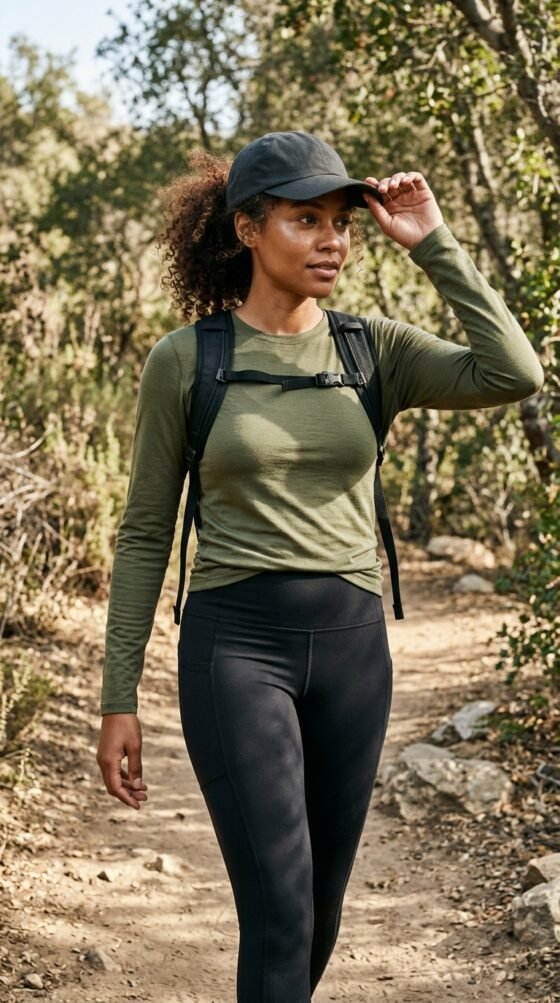
1. The Lightweight Merino Base and Trail Leggings
An easy warm-weather formula that feels like activewear but works on the trail.
The Outfit Formula
- Lightweight long-sleeve merino or synthetic base layer in a solid color
- High-waisted hiking leggings with a wide, flat waistband
- Trail runners or low hiking shoes
- Merino socks, a cap, and a small hydration pack
Why It Works: A thin base layer protects your arms from sun and brush without adding heat, while a wide waistband on the leggings spreads pressure instead of digging in. The combination is streamlined, so you can move freely on easier trails and still look pulled together at the trailhead.
Stylist Tip: Choose leggings with a gusseted crotch and at least one secure pocket. A dark color or a subtle print hides trail dust and looks more intentional than a bright solid.
Wear It For: A local day hike, a rail trail, or a warm-weather walk with a coffee stop afterward.
Easy Swap: Swap the leggings for quick-drying hiking shorts with a built-in liner if the forecast is hot and the trail is smooth.
2. The Quarter-Zip Fleece and Cargo Hiking Pants
A classic cool-weather look with pockets and room to move.

The Outfit Formula
- Light merino or synthetic quarter-zip as a base or mid layer
- Cargo hiking pants with articulated knees and a gusseted crotch
- Hiking boots or sturdy trail shoes
- A beanie and a small daypack
Why It Works: Cargo pants are back in a functional way, with pockets that hold a phone, snack, or map without a pack. A quarter-zip lets you vent heat on the climb and zip up on the summit. Articulated knees and a gusseted crotch mean you can step high onto rocks without the fabric pulling.
Stylist Tip: Look for a cargo pant with a mid-rise waist and a slightly tapered leg. A straight or relaxed leg looks current, while a very baggy cut can catch on brush.
Wear It For: A fall or spring hike with mixed terrain, or a cool morning walk that warms up by midday.
Easy Swap: Swap the cargo pants for stretch hiking joggers if you prefer a closer fit.
3. The Hiking Dress with Built-In Shorts
A one-and-done warm-weather outfit that is genuinely functional.

The Outfit Formula
- Technical hiking dress with moisture-wicking fabric and built-in liner shorts
- Trail runners or low hiking shoes
- A light windbreaker tied around the waist
- A cap and small crossbody pack
Why It Works: A hiking dress removes the decision-making. The best versions are made from lightweight, breathable fabric with a flattering cut, and they include liner shorts to prevent chafing and keep you covered on steps and scrambles. It is cooler than pants and easier than matching separates.
Stylist Tip: Choose a dress with a defined waist or a cinch tie so it does not feel like a sack. Pockets are a bonus for a phone or lip balm.
Wear It For: A warm-weather day hike, a travel day with light walking, or a scenic overlook stroll.
Easy Swap: Swap the dress for a hiking skort if you prefer separate legs but want the same airy feel.
4. The Wide-Leg Hiking Pant and Fitted Tank
A fashion-forward silhouette with real trail details.

The Outfit Formula
- Wide-leg hiking pants in a lightweight softshell or stretch nylon
- Fitted moisture-wicking tank or tee
- Approach shoes or trail runners
- ’90s-style wraparound sunglasses and a bandana
Why It Works: Wide-leg hiking pants are one of the clearest style shifts in outdoor wear. A relaxed leg moves easily on steep sections, and the silhouette feels modern rather than granola. A fitted top balances the volume so the outfit looks deliberate.
Stylist Tip: Look for a wide-leg pant with a hem cinch so you can adjust the length and keep the fabric away from your feet on scrambles. A high-rise waist keeps the proportion flattering.
Wear It For: A stylish day hike, a trail that ends at a brewery or café, or a hike where photos matter as much as mileage.
Easy Swap: Swap the wide-leg pant for a straight-leg hiking pant if you prefer a closer fit around the ankle.
5. The Flannel Shirt and Stretch Hiking Pants
A cozy, layered look for cool mornings and fall trails.

The Outfit Formula
- Lightweight flannel or brushed button-down shirt, worn open over a tee
- Stretch hiking pants with a mid-rise waist
- Hiking boots or trail shoes
- A puffer vest or fleece vest for warmth
Why It Works: An open flannel gives you a built-in vent you can close without stopping, and it adds a layer of warmth that feels familiar and stylish. Stretch hiking pants handle the movement, while a vest warms your core without restricting your arms.
Stylist Tip: Choose a flannel in a smaller-scale plaid or a solid color so it reads more “outdoor style” and less “lumberjack costume.” Roll the sleeves to avoid catching them on branches.
Wear It For: A fall hike, a cool-weather walk, or a trail with a stop for lunch in town.
Easy Swap: Swap the flannel for a lightweight merino hoodie if you run warm.
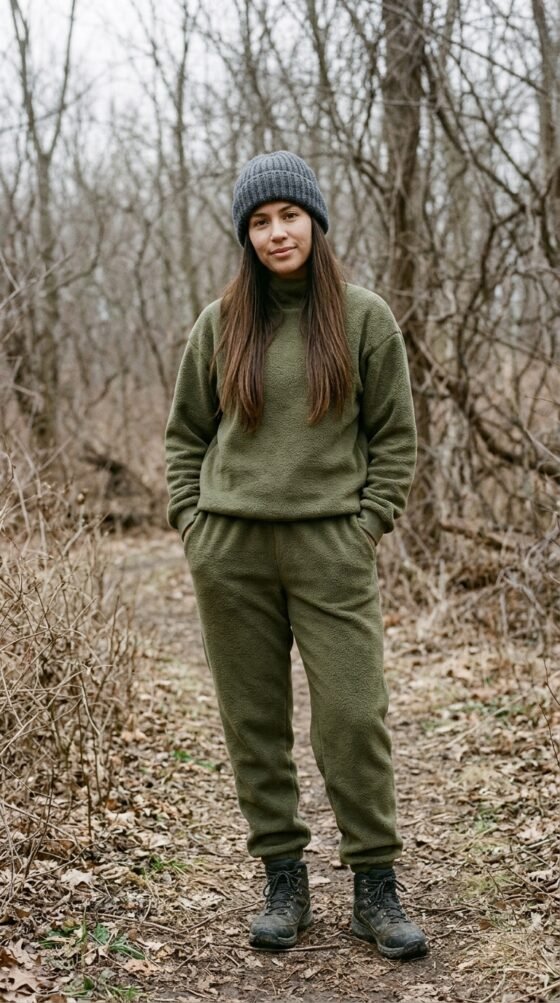
6. The Matching Fleece Set
A coordinated look that feels like a set but performs like technical layers.
The Outfit Formula
- Fleece or grid-fleece pullover in a solid color
- Matching fleece or softshell jogger or pant
- Trail shoes or hiking boots
- A simple beanie and a small pack
Why It Works: A matching set removes the guesswork and looks intentionally styled. Fleece is warm, breathable, and soft against the skin, and a jogger silhouette with a tapered ankle moves well on the trail without dragging.
Stylist Tip: Keep the set in a muted color like olive, charcoal, or oatmeal so it feels elevated rather than costume-like. Add a contrasting sock or shoe for a small pop.
Wear It For: A cold-weather hike, a winter walk, or a cabin weekend with light trail time.
Easy Swap: Swap the fleece jogger for a fleece-lined legging if you prefer a closer fit.
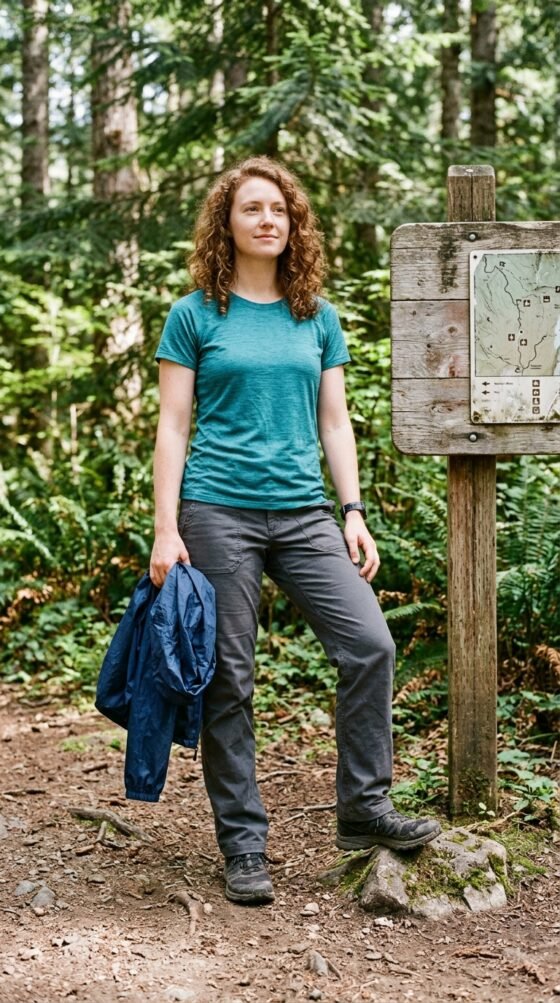
7. The Trail Runner and Everyday Outdoor Uniform
For the hiker who wants one outfit that works from the trail to town.
The Outfit Formula
- Quick-drying athletic tee or tank
- Relaxed straight-leg hiking pant or durable jogger
- Trail runners in a neutral or bold color
- A lightweight windbreaker and a cap
Why It Works: Trail runners are light, flexible, and require no break-in, making them a practical choice for smoother trails and confident hikers. A straight-leg hiking pant or durable jogger looks at home on the trail and at a post-hike coffee shop.
Stylist Tip: Choose a trail runner with a grippy outsole and a rock plate if the trail has roots or small rocks. A darker color hides dust better than white.
Wear It For: A well-maintained day hike, a travel day with light walking, or a quick after-work trail.
Easy Swap: Swap the trail runners for low hiking shoes if you want more protection underfoot.
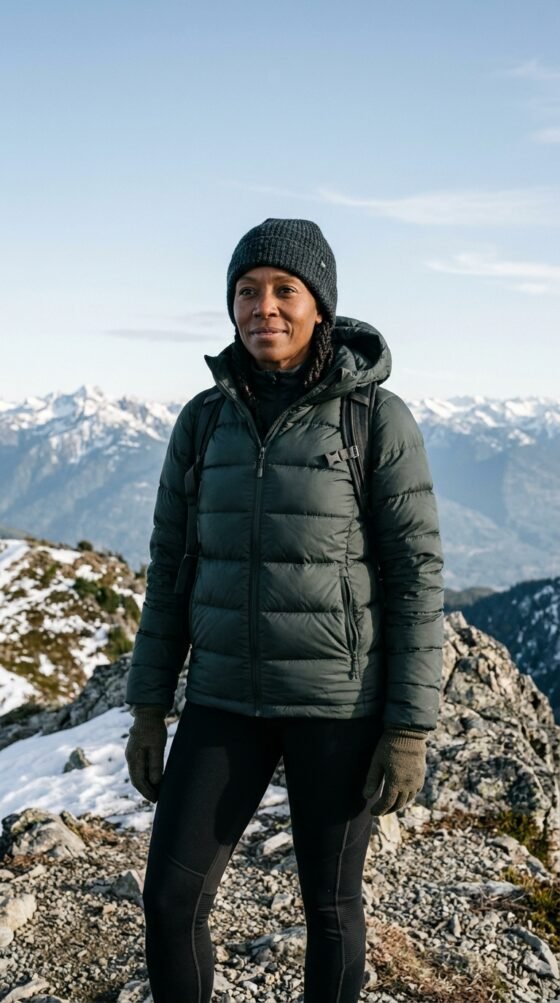
8. The Packable Puffer and Hiking Leggings
A warm layer for cold starts and high elevations.
The Outfit Formula
- Hiking leggings with a wide waistband
- Lightweight merino base layer on top
- Packable puffer jacket or vest
- Beanie, gloves, and warm socks
Why It Works: A packable puffer adds significant warmth for very little weight, and it compresses into a pack when the sun comes out. Leggings under a puffer keep the lower body streamlined and comfortable, especially on cold-weather hikes where bulk can feel restrictive.
Stylist Tip: Choose a puffer with a hood and a hem that hits at the hip. A matte fabric looks more polished than a shiny one.
Wear It For: A cold-weather hike, a winter walk, or a high-elevation trail with a chilly summit.
Easy Swap: Swap the leggings for fleece-lined hiking pants if you expect wind or brush.
9. The Hiking Skort and Sun Hoodie
A warm-weather combination that protects without overheating.

The Outfit Formula
- Hiking skort with built-in shorts and a flattering waistband
- UPF 50 sun hoodie or lightweight long-sleeve tee
- Trail runners or low hiking shoes
- A cap and sunglasses
Why It Works: A skort gives you the airflow of a skirt with the coverage of shorts. A sun hoodie protects your neck, ears, and arms from sun without the need for constant sunscreen reapplication. Together, they handle heat and exposure without feeling heavy.
Stylist Tip: Choose a skort with a wide, flat waistband and shorts that stay in place. A slight A-line or wrap shape is more flattering than a straight cut.
Wear It For: A hot-weather hike, a desert or exposed trail, or a summer walk with little shade.
Easy Swap: Swap the skort for quick-dry hiking shorts if you prefer separate legs.
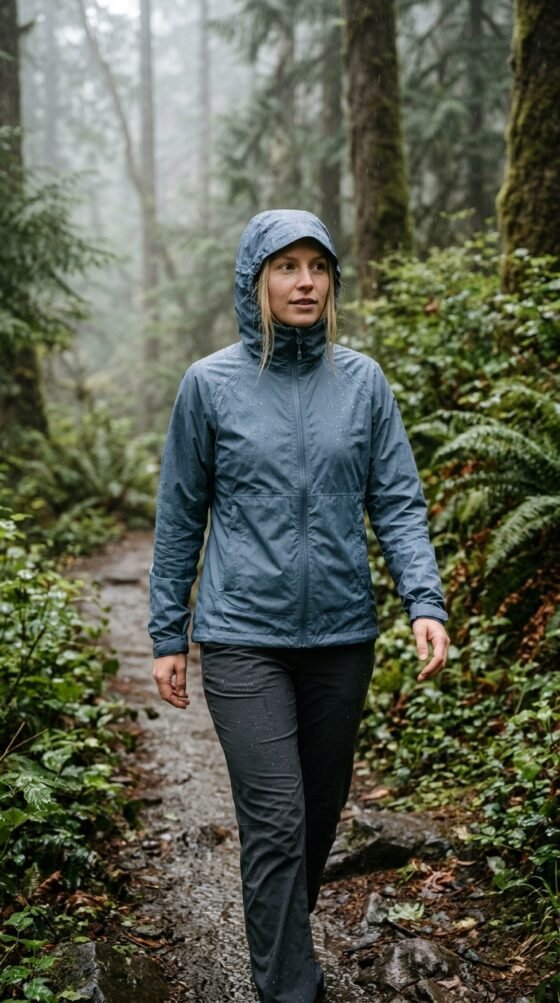
10. The Rain Shell and Quick-Dry Pants
A wet-weather setup that keeps you moving.
The Outfit Formula
- Packable waterproof rain shell with a hood
- Quick-drying hiking pants or leggings
- Waterproof trail shoes or boots
- Merino socks and a cap
Why It Works: A rain shell is the layer that makes a wet hike possible. The best ones are lightweight, packable, and breathable enough that you do not overheat on the climb. Quick-dry bottoms and waterproof footwear keep the rest of the system working.
Stylist Tip: Look for a shell with pit zips or a large chest vent. A longer hem that covers the top of your pants keeps rain from running down your back.
Wear It For: A rainy forecast, a shoulder-season hike, or a trail with unpredictable weather.
Easy Swap: Swap the rain shell for a windbreaker if the forecast is dry but windy.
11. The Plus-Size Hiking Uniform with a Wide Waistband
A trail-ready formula built around fit and comfort.
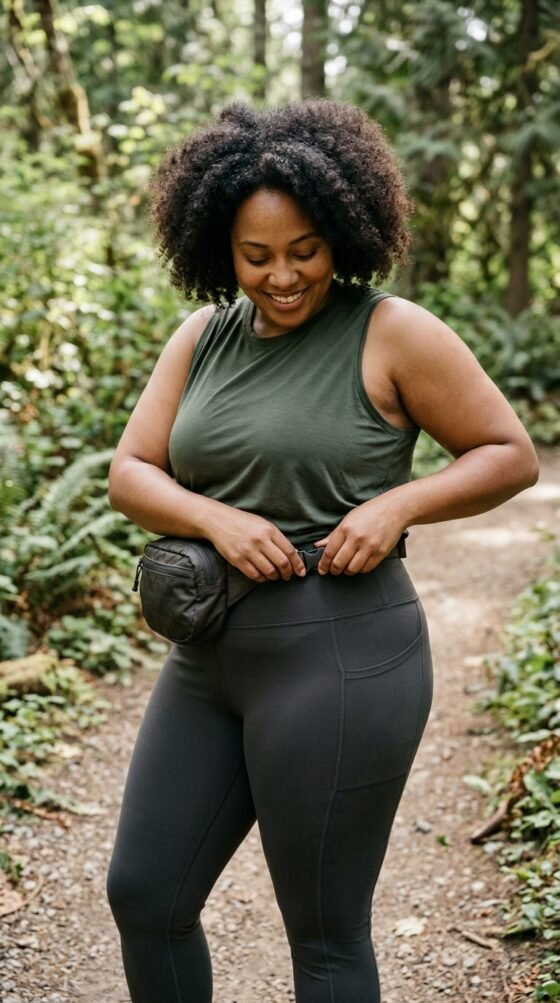
The Outfit Formula
- Moisture-wicking tank or tee with a relaxed fit
- High-waisted hiking leggings or pants with a wide, flat waistband (at least three inches)
- Trail runners or supportive hiking shoes
- A hip pack or small backpack with a padded waist belt
Why It Works: The most common fit problems on a plus-size hike are waistbands that roll, shorts that ride up, and thigh chafe. A wide, flat waistband spreads pressure and stays in place, while a longer inseam or liner short prevents riding up. Nylon-spandex leggings recover their shape better than cotton blends, which bag at the knee.
Stylist Tip: Test the waistband by sitting and bending before you buy. If it rolls in the fitting room, it will roll on the trail. A gusseted crotch and articulated knees also make a noticeable difference.
Wear It For: Any hike where you want a reliable, comfortable foundation, from a local trail to a longer day out.
Easy Swap: Swap the leggings for a hiking skort with a built-in liner if you prefer airflow but still want chafe protection.
12. The Trail Skirt Over Leggings
A layered look that adds coverage and style without sacrificing movement.
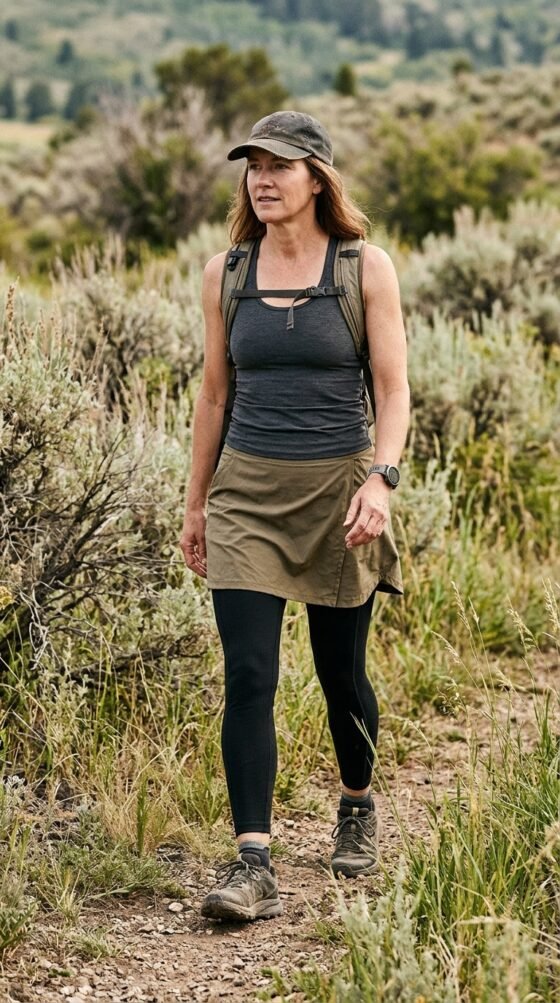
The Outfit Formula
- Lightweight technical trail skirt or wrap skirt
- Hiking leggings underneath
- Fitted base layer or tank
- Trail runners and a cap
Why It Works: A trail skirt over leggings gives you the freedom of a skirt with the protection of a legging. It is a useful layer for brushy trails, and it can be removed and packed away if the terrain gets scrambly. The leggings underneath prevent chafe and add warmth.
Stylist Tip: Choose a skirt with a drawstring or elastic waist so it stays in place over the leggings. A slightly shorter skirt over a full-length legging looks intentional; a midi length can feel cumbersome on the trail.
Wear It For: A mild-weather hike, a trail with light brush, or a hike where you want a more feminine silhouette.
Easy Swap: Swap the skirt for a skort if you prefer one piece.
13. The Fleece Vest and Long-Sleeve Merino
A core-warming layer for crisp mornings and shaded trails.
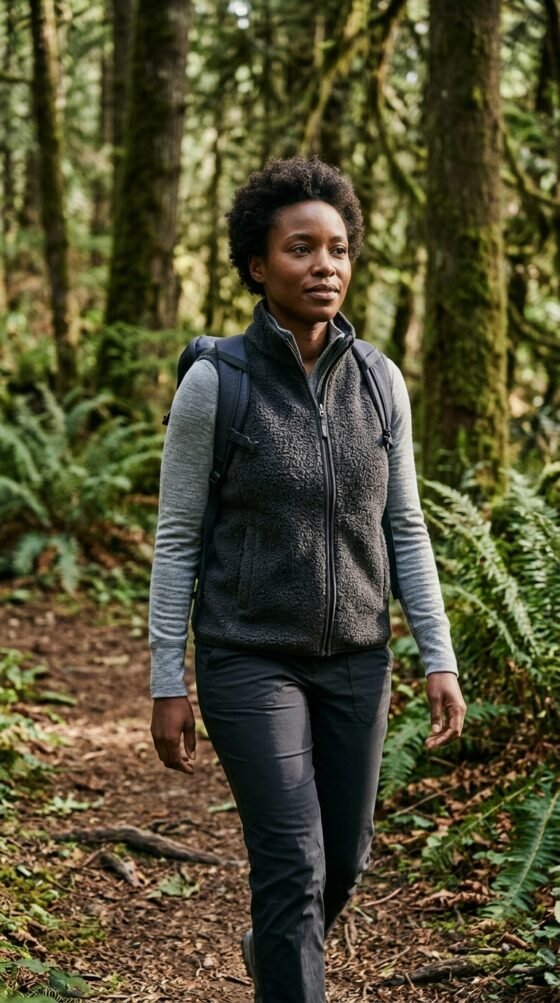
The Outfit Formula
- Long-sleeve merino base layer (150–200 gsm)
- Fleece or insulated vest
- Stretch hiking pants or durable leggings
- Hiking boots or trail shoes
Why It Works: A vest warms your core without restricting your arms, which matters when you are using trekking poles or scrambling. Merino underneath manages moisture and odor, so you stay comfortable on longer days.
Stylist Tip: Choose a vest that hits at the hip and has a full zip so you can vent heat. A dark vest over a lighter base layer creates a clean, flattering contrast.
Wear It For: A fall or spring hike with cool starts and sunny afternoons, or a shaded forest trail.
Easy Swap: Swap the vest for a light fleece jacket if the forecast is colder than expected.
14. The Cargo Short and Graphic Tee
A relaxed, warm-weather look with a little personality.
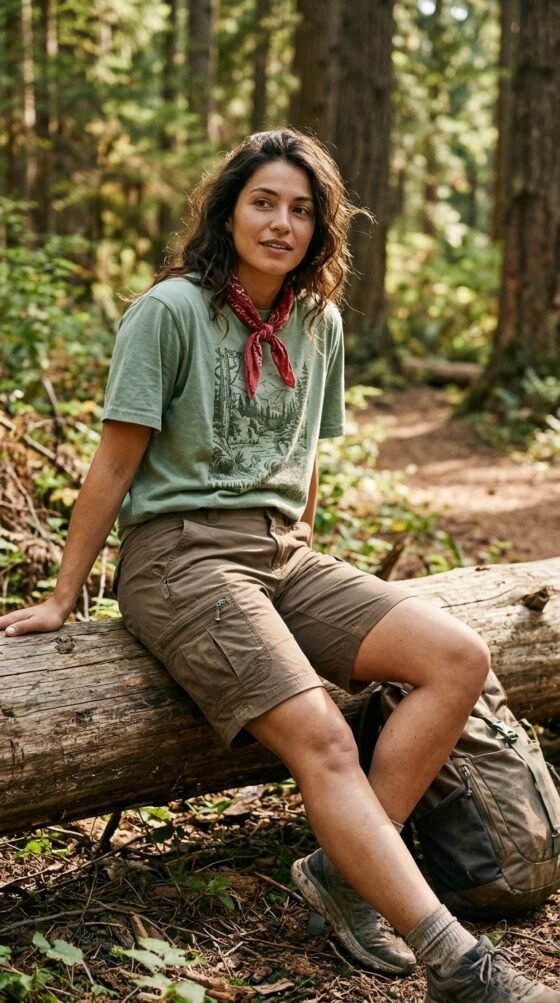
The Outfit Formula
- Cargo hiking shorts with a built-in liner or a longer inseam
- Moisture-wicking graphic tee or plain performance tee
- Trail runners or low hiking shoes
- A bandana and sunglasses
Why It Works: Cargo shorts are functional and current, especially with a relaxed fit and plenty of pockets. A graphic tee adds personality without compromising performance, and a bandana can be used for sun protection, sweat, or a quick cleanup.
Stylist Tip: Choose shorts with at least a seven-inch inseam or a built-in liner to prevent riding up. A slightly longer short looks more intentional than a very short athletic cut.
Wear It For: A summer day hike, a casual trail walk, or a camping trip with light hiking.
Easy Swap: Swap the shorts for a hiking skort if you prefer more coverage.
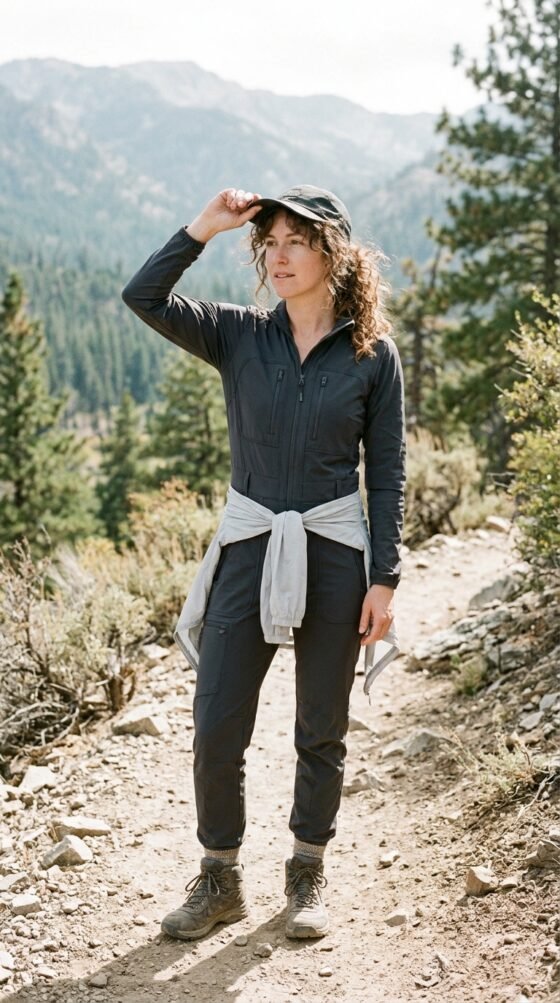
15. The One-Piece Active Suit or Hiking Jumpsuit
A low-effort, high-impact option for hikers who want a single piece.
The Outfit Formula
- One-piece active suit or hiking jumpsuit in a stretch, moisture-wicking fabric
- Light layer tied around the waist or in a pack
- Trail runners or hiking shoes
- A cap and a small pack
Why It Works: A one-piece removes the waistband decision entirely and creates a clean, elongated line. The best versions are made from a stretch fabric that moves with you and often include pockets and a defined waist. It is a practical choice for easy to moderate trails.
Stylist Tip: Choose a suit with a bathroom-friendly design or a stretchy neckline. A dark or solid color is more versatile and hides trail dust.
Wear It For: A casual day hike, a travel day with light walking, or a trail that ends in town.
Easy Swap: Swap the one-piece for a matching two-piece set if you prefer separate pieces.
Frequently Asked Questions
What should I wear for my first hike?
Start with a moisture-wicking base layer, comfortable leggings or hiking pants, and shoes you have already walked in. Add a light fleece or vest and a packable rain shell. Avoid cotton. Choose merino or synthetic socks to help prevent blisters.
Are leggings okay for hiking?
Yes, especially for easy day hikes and well-maintained trails. Leggings are lightweight and comfortable, but they offer less abrasion protection than hiking pants on rugged ground. Choose a pair with a wide waistband and a durable, stretchy fabric.
What is the best footwear for hiking: boots or trail runners?
It depends on the trail. Trail runners are lighter, need no break-in, and work well on smoother paths. Hiking boots offer more ankle support and protection on rough terrain or when carrying a heavier pack. Match the shoe to the hike, not the other way around.
How do I prevent chafing on a hike?
Wear shorts with a built-in liner or leggings under a skirt or loose shorts. Choose a longer inseam if you prefer open shorts. Anti-chafe balm can help, but the right fit is the most reliable fix.
What colors are best for hiking outfits?
Dark colors and subtle prints hide trail dust and sweat better than pale solids. Earth tones like olive, charcoal, brown, and navy feel current and pair easily with other gear. A bright accent, like a cap or sock, can add personality without making the whole outfit high-maintenance.
Conclusion
The best hiking outfit is the one that lets you forget about your clothes and focus on the trail. Start with a moisture-wicking base, choose a bottom that matches the terrain, and add layers you can remove in seconds. Flattering fit is not about a specific body type. It is about a waistband that stays put, a leg that moves, and a shoe you trust.
Pick one formula from this list that fits your next hike, test it on a short walk first, and adjust from there. What is your go-to hiking outfit?

Mia Nelson
I test every outfit in real weather before it reaches the blog — so you never have to guess if the linen survives a July…
About me →