Welcome to the ultimate fall fashion destination.Crisp air and cozy layers are finally here.Fall is proof that change is beautiful, so upgrade your style.Level up your wardrobe with our newest autumn arrivals.Embrace the season of renewal and look fabulous every single day.Dressing for the season, with confidence.
Skip to content
Get Measured, Get Comfortable

Bra Size Calculator

Two measurements — band and bust — for an estimated band and cup size, using the same method most lingerie fitters start with.

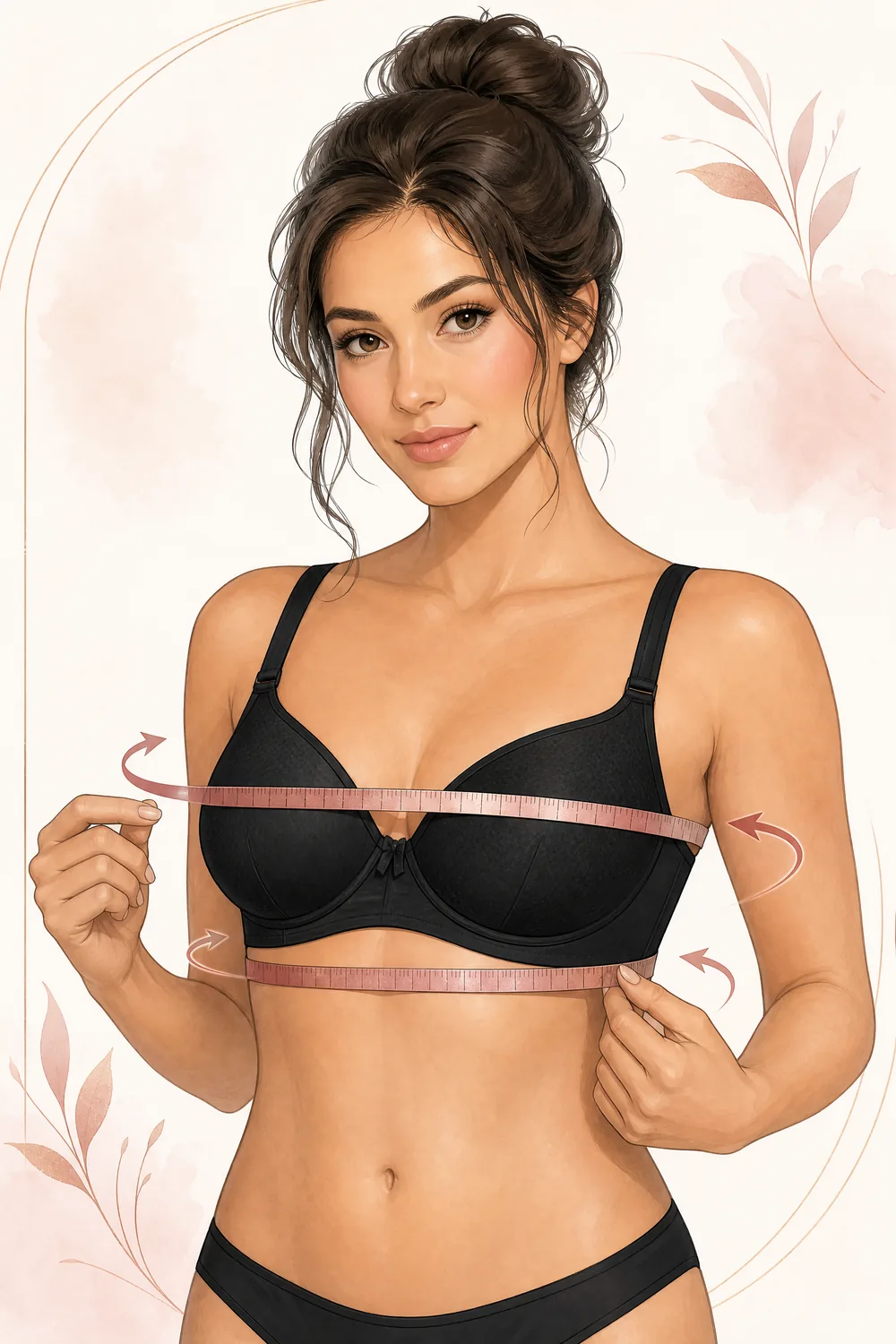
Female body measurement guide

Wearing a non-padded bra, wrap the tape snugly around your ribcage directly under your bust, parallel to the floor. It should feel firm but not restrict your breathing.

Female body measurement guide

Still wearing that non-padded bra, wrap the tape around the fullest part of your chest — usually right across the nipple line — keeping it level and not pulled tight.

Why So Many Women Wear The Wrong Size

Studies on bra fit consistently find that most women are wearing a band that's too large and a cup that's too small — often without realizing it, because that combination doesn't always feel obviously wrong day to day. The band, not the straps, should be doing about 80% of the support work; if your straps dig in and leave marks, that's usually a sign the band is too loose, not that you need smaller cups.

How This Calculator Works

This uses the traditional "add 4 or 5" method: your rounded underbust measurement is adjusted up to the nearest even number most brands actually manufacture, then the gap between that band size and your bust measurement determines your cup — each inch of difference is roughly one cup size. It's the same starting formula most lingerie fitters begin with before adjusting for the specific bra on your body.

Understanding Sister Sizes

If a size doesn't feel right, its "sister size" is usually the next thing worth trying: going down a band size and up a cup size (or the reverse) keeps the cup volume roughly the same while changing how the band fits. A 34C and a 36B hold approximately the same cup volume — just distributed across a different band.

Signs Your Current Bra Doesn't Fit

  • The band rides up in the back instead of sitting level all the way around.
  • You need the loosest hook when the bra is new (leaving no room to tighten as it stretches with wear).
  • There's spillage over or gapping under the cup.
  • The center point between the cups doesn't sit flat against your sternum.

Frequently Asked Questions

Some fitters use a "direct under-bust" method with no addition at all, which tends to produce a smaller band and larger cup than the traditional method used here. Both are valid starting points — the real test is always how a specific bra feels on your body.
About once a year, and any time you experience a meaningful weight change, pregnancy, or start or stop a hormonal medication — all of these can shift both band and cup size.
Not exactly — a C cup at one brand can feel closer to a B or D at another, since cup volume is proportional to band size and every manufacturer grades that relationship slightly differently. Use your calculated size as the starting point for trying on, not the final word.