How To Find Jeans That Fit Your Thighs Without Gapping At The Waist
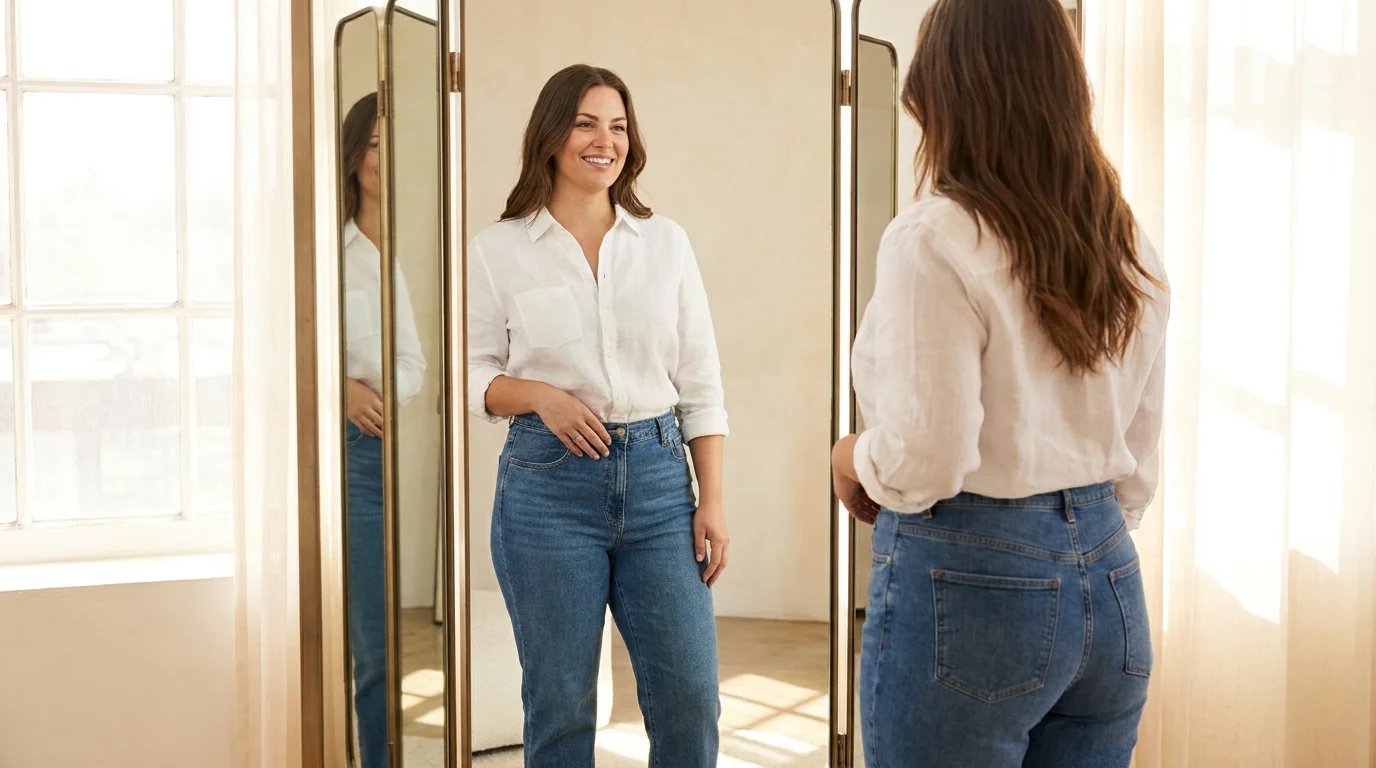
You know the feeling. You pull on a pair of jeans, and they slide over your thighs like they were made for you. Then you look in the mirror, and there it is — a gap big enough to fit your hand at the back of the waistband. You pull out your belt, but that only creates a saggy, bunched-up look you hate.
This happens because most jeans are cut straight. Your body is beautifully curved. You don’t need to shrink your thighs. You just need the right denim strategy. I’ve been styling women with exactly this challenge for years, and there’s a simple system that works.
Know Your True Measurements (Skip The Size Chart)
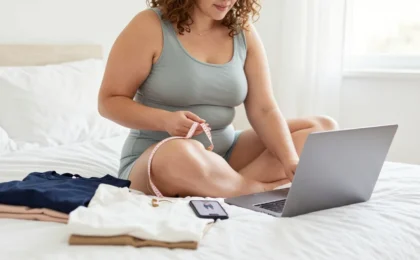
Stop looking at the number on the tag. Sizes are inconsistent across brands, and they barely tell you anything useful. Instead, get a soft measuring tape and measure your natural waist — that’s the narrowest part above your belly button. Then measure the fullest part of your hips and the widest part of your thighs, standing with your feet hip-width apart.
Quick Tip:
- Write your measurements on your phone’s notes app
- Bring your tape measure when shopping in stores
- Ignore “vanity sizing” completely
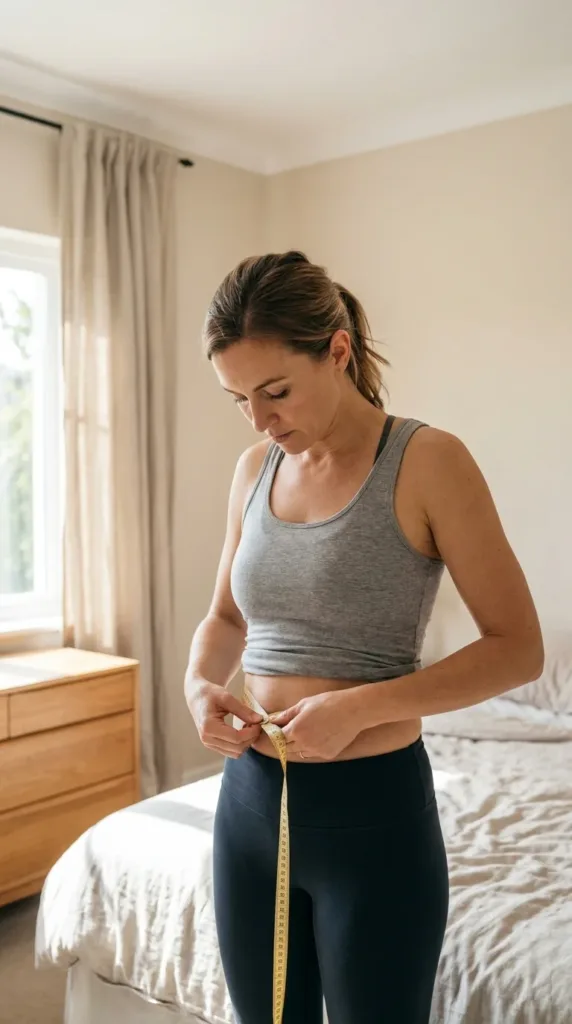
Now compare those numbers to each brand’s specific size guide. Not the general one. The one for that exact style. Here’s the insider trick: look at the “rise” measurement too. A higher rise hits your natural waist and reduces gaping because there’s more fabric to anchor the fit. Lower rises often gap worse. Know your rise preference before you browse.
Buy For Your Thighs First, Alter The Waist Second
This is the golden rule. If the jeans fit your thighs and hips comfortably, you can fix the waist. You cannot fix thighs that are too tight. When you’re trying on jeans, do a squat test right in the dressing room. If they dig in, pinch, or feel restrictive, move on. Your thighs need breathing room and fabric that moves with you.
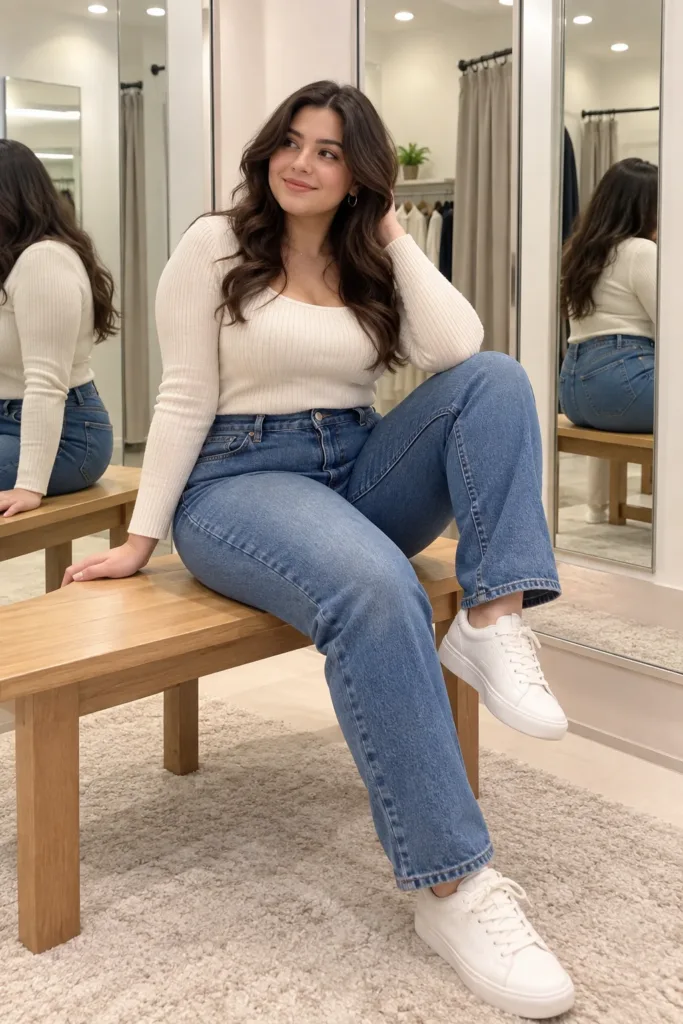
Once you find that thigh-happy pair, check the waist. If it gaps slightly, that’s okay. A good tailor can take in the waistband for $15–$25. This changes everything. You stop searching for a unicorn pair and start buying jeans that work with your body then customizing the fit. Tailoring isn’t a failure — it’s what stylish women do.
Hunt For Curvy-Specific Cuts (They Work)
Many brands now make “curvy fit” jeans. These have a smaller waist measurement and a larger hip and thigh measurement built into the pattern. Look for this language on the tag. Brands like Good American, Madewell (Curvy line), Abercrombie (Curve Love), and Universal Standard actually design for this exact proportion difference.
Don’t assume all curvy lines fit the same. Try multiple styles within the same brand. Some run generous in the hip. Others are more moderate. Always read reviews from women who share your body type. Search phrases like “fits thick thighs” or “no waist gap.” Real customers tell the truth about how these jeans wear after a full day, not just in the fitting room.
Check The Fabric Blend Before You Buy
Fabric choice matters more than you think. Jeans with 1–2% elastane or spandex give you some stretch without losing their shape by lunchtime. This “recovery” is key. You want the denim to hug you without bagging out at the waist after you sit down for an hour.
Quick Tip:
- 98% cotton / 2% elastane = sweet spot
- 100% cotton = stiff, little give (harder for curves)
- 5%+ stretch = too soft, will bag out
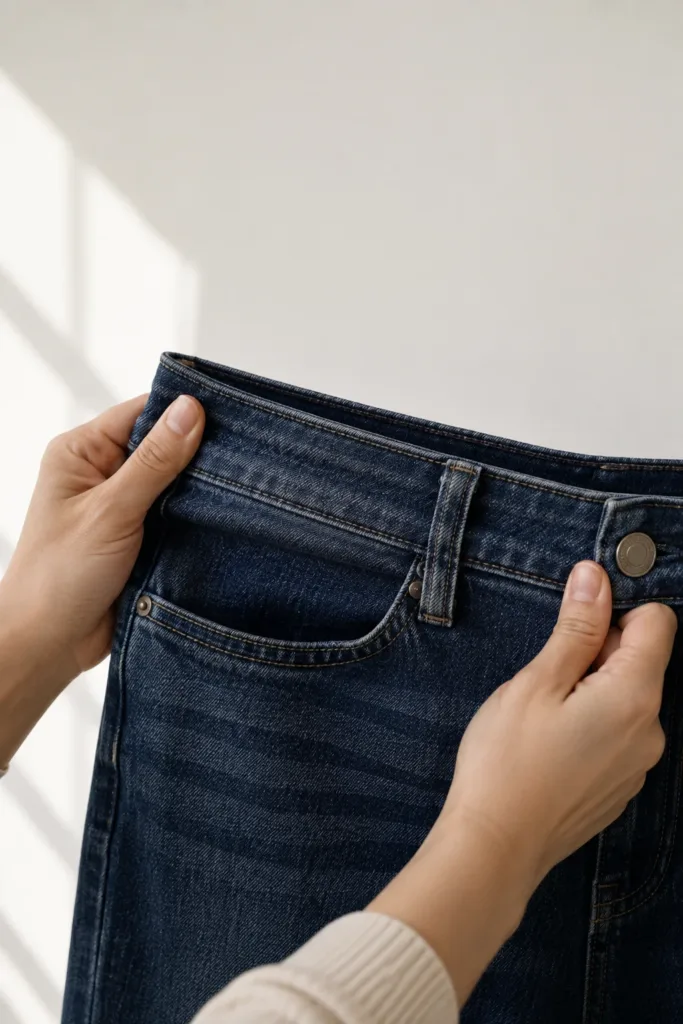
Hold the fabric in your hands and stretch it. Does it bounce back? That’s what you want. Stiff denim gaps because it doesn’t mold to your waist. Overly stretchy denim gaps because it loses shape. The middle ground gives you that magic “painted on” feel without the sag.
Master The “Back Pocket” Test
Here’s a trick most women overlook. Look at the back pockets. If they sit low and wide apart, they make your waist look larger and create more gaping potential. Pockets placed higher and closer together visually lift your rear and help the waistband sit snugger.
Also check the waistband itself. A contoured waistband — one that curves slightly downward in the front and sits higher in the back — naturally fits curvier bodies better. It follows your shape instead of fighting it. When you hold the jeans up, look at the waistline shape. Straight across = more gaping. Curved = better fit.
Try The “Sit Test” Before You Commit
Standing in front of the mirror isn’t enough. Sit down in those jeans. Cross your legs. Lean forward. Does the waist dig in or gap open? This is where most women discover the truth. The jeans that look great standing up can become uncomfortable or gappy the moment you sit.
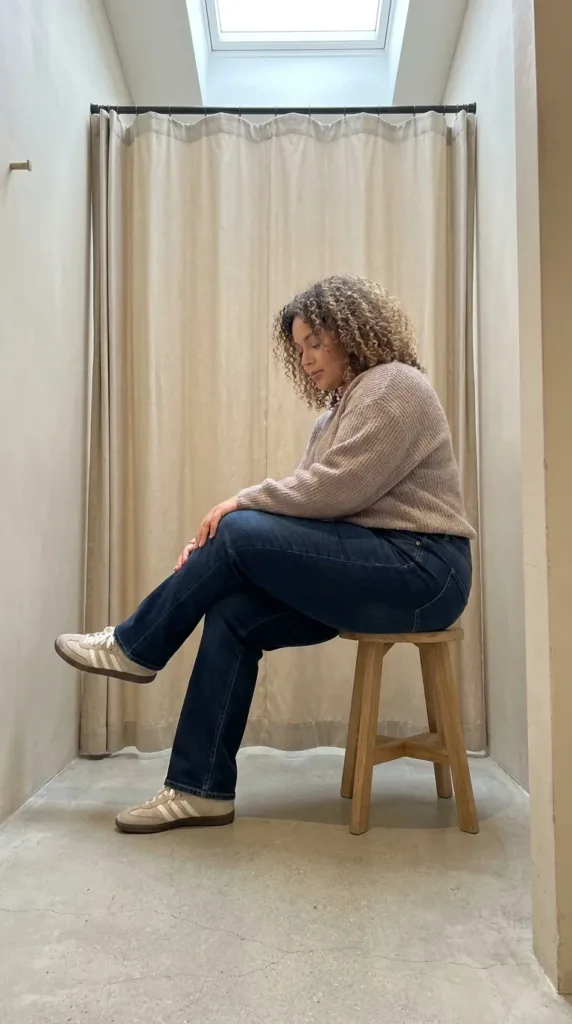
Walk around the store for a few minutes. Bend over and pretend to pick something up. Move your body naturally. If the waistband shifts or creates a gap, those jeans aren’t for you. The right pair stays put through daily movement. This one test saves you from buying jeans you’ll only wear when standing still.
When In Doubt, Size Up And Belt Smartly
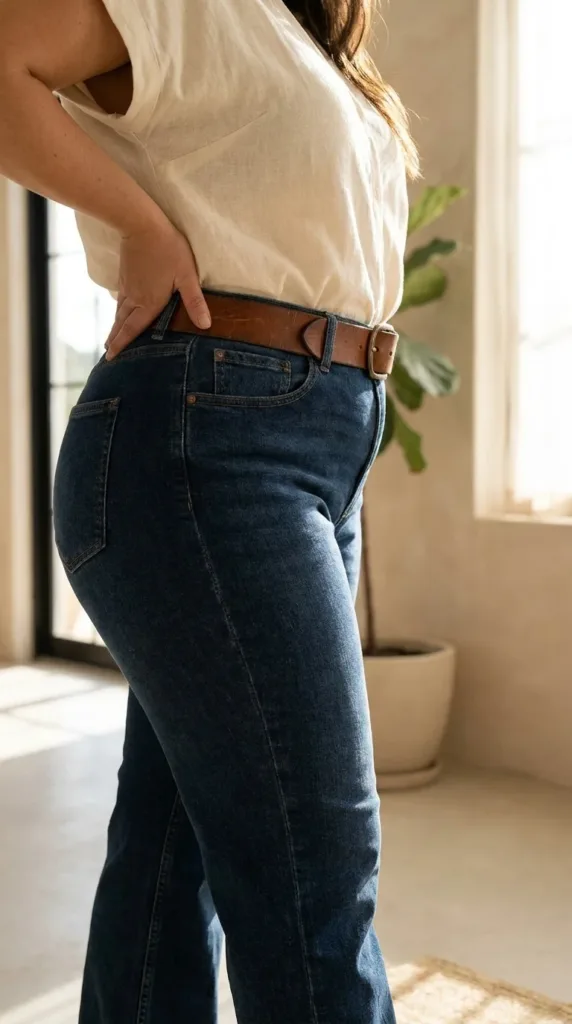
Sometimes you find a pair that fits your thighs perfectly, but the waist gapes even after tailoring. That’s when you choose a different strategy. Size up one full size. Then wear a wide belt — not a thin one. A wide belt covers more surface area and creates a smooth, intentional look.
Quick Tip:
- Wide belts (1.5–2 inches) = best for gap control
- Elastic belt inserts = hidden solution under high-waisted jeans
- Cinch the waist with a belt at your natural waist, not your hips
This method works best with high-rise jeans. The belt sits at your smallest point, and the extra fabric drapes over your hips beautifully. It’s a styling solution that looks deliberate, not desperate. Think of it as creating shape, not hiding anything.
FAQ
Why do my jeans always gap at the back waist?
Most jeans are cut with a straight waist-to-hip ratio. If you have a smaller waist compared to your hips and thighs, the standard proportions don’t match your shape. The waistband simply has more fabric than your waist requires. Curvy-specific cuts and tailoring solve this issue directly.
What jeans are best for big thighs and small waist?
Look for “curvy fit” or “hourglass” styles from brands like Madewell, Abercrombie, Good American, and Levi’s. These designs add extra room in the hip and thigh while keeping the waist measurement smaller. Always prioritize 1–2% stretch and check reviews from women with similar proportions.
Can a tailor fix a waist gap without ruining the jeans?
Yes, absolutely. A skilled tailor can take in the waistband at the center back seam. This preserves the jeans’ original shape while removing the gap. The cost ranges from $15–$25. Many dry cleaners offer this service. It’s the most reliable solution for achieving a custom fit without endless returns.
Conclusion
Finding jeans that fit your thighs without a waist gap isn’t luck — it’s strategy. Measure yourself honestly. Buy for your thighs first. Choose curvy-specific cuts. Check the fabric. Test the fit in motion. Tailor when needed. You deserve jeans that make you feel confident from every angle. Now that you know the system, go find your perfect pair and never settle for a gap again. Want more styling guides like this? Check out our complete denim fit guide for every body shape.

Mia Nelson
I test every outfit in real weather before it reaches the blog — so you never have to guess if the linen survives a July…
About me →